Get Live Cricket Scores, Scorecard, Schedules of International and Domestic cricket matches along with Latest News, Videos and ICC Cricket Rankings of Players on Cricbuzzbd.
Get Live Cricket Scores, Scorecard, Schedules of International and Domestic cricket matches along with Latest News, Videos and ICC Cricket Rankings of Players on Cricbuzzbd.
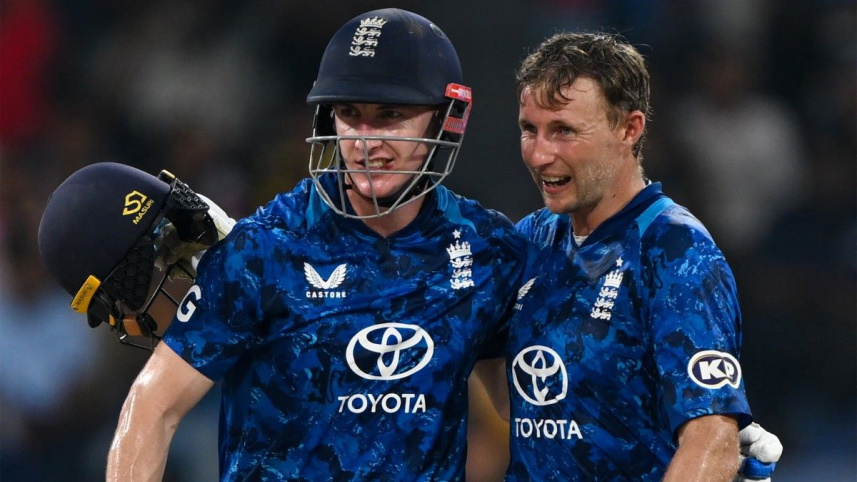
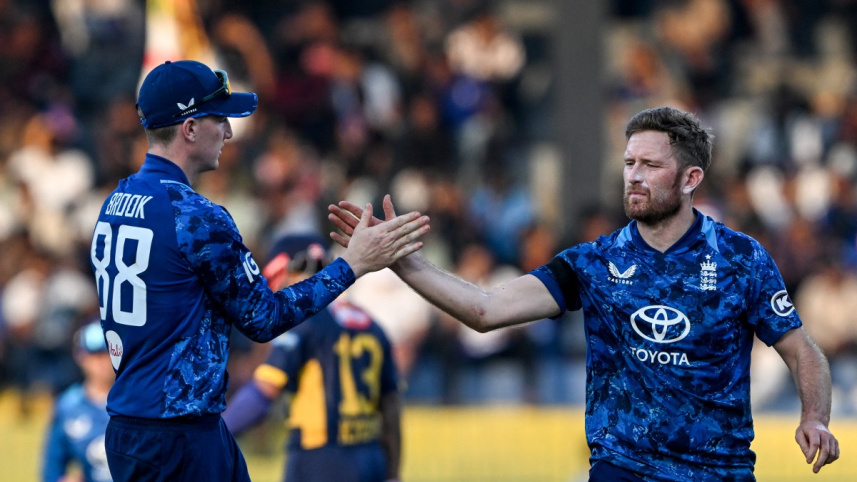
Joe Root said he hopes England captain Harry Brook’s WWE-inspired celebration after a blistering century against Sri Lanka on Tuesday will not be misinterpreted, as he attempts to rebuild trust following last year’s nightclub incident.
Brook smashed 136 off just 66 deliveries, bringing up his ton in 57 balls before celebrating by removing his gloves and smashing them together, mimicking former WWE wrestler “Stone Cold” Steve Austin’s signature beer can celebration in the ring
Brook walked in with England at 166-3 and built an unbeaten 191-run stand with Root (111 not out) to guide England to 357-3, eventually winning by 53 runs.
The captain confirmed it was a tribute to Austin but insisted the celebration was simply about “celebrating tonight with the boys” as England clinched the ODI series 2-1.
“Like I said the other day in my press conference, I’ve got to try and gain that trust back with the lads,” Brook said.
“The way I wanted to do that was perform, play well and lead from the front.”
Brook had previously acknowledged he was lucky to be England captain after apologising for an altercation with a nightclub bouncer in New Zealand last year.
Root defended his teammate’s celebration, saying there was “no malice” behind the gesture and hoped it would be taken in the right spirit.
“I think you can work it out if you’ve ever watched wrestling, but that’s his way of doing that, trying to show that he wants that approval from the group is through humour,” Root said.
“That’s another area of why I think he’s going to be a great leader because he has that side to him as well. He showed his calmness and his clarity under pressure, but he also showed humour as well in doing that.
“Hopefully, it’s received in the right way because there’s definitely no malice behind it or anything other than him just trying to have a bit of a joke with his teammates.”
England will now face Sri Lanka in three Twenty20 matches before beginning their T20 World Cup campaign next month.
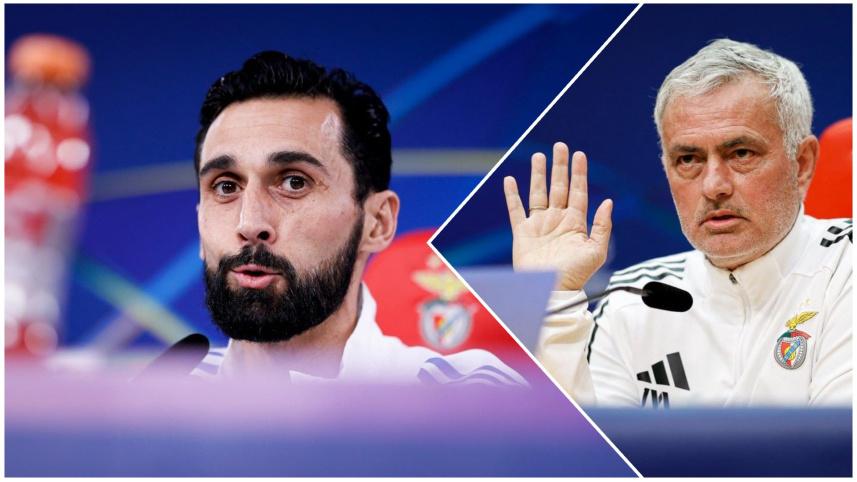
Benfica coach Jose Mourinho said his Real Madrid counterpart Alvaro Arbeloa was like a child to him ahead of their Champions League battle on Wednesday.
Mourinho’s Benfica side will face Real Madrid on Wednesday in a make-or-break Champions League encounter, marking an emotional reunion for the Portuguese manager with his former club and one of his most trusted ex-players, Alvaro Arbeloa.
The veteran Portuguese manager coached Arbeloa at Madrid during his time at the helm of Los Blancos between 2010-2013, and had a strong relationship with the former defender in a dressing room that was splintering.
After a comment from Mourinho last week about being “surprised” when inexperienced managers lead big European clubs was viewed as a dig at new Madrid coach Arbeloa, he said he would never try to make life hard for his former charge
Former Inter Milan coach Mourinho said in Italy his words were also being taken as criticism of the appointment of Cristian Chivu at the Serie A side last summer.
“There is one problem — both Chivu and Arbeloa are my children, they are not just ex-players of mine, but they are special,” Mourinho told a news conference Tuesday.
“Speaking about Alvaro, I would say that he is one of the players — from a human point of view, from a personal point of view, and personal empathy — he is one of my favourites of them all.
“Obviously he is not the best player who has played for Real Madrid, but he is certainly one of the best men who has played for me at Real Madrid.”
Mourinho said he was surprised when he himself was offered the chance to lead Benfica at the beginning of his coaching career in 2000, so his words could not be taken as an insult.
“The last thing I would do would be to put pressure on him,” explained the 63-year-old. “I want everything to go well for him, and for him to have a fantastic career as a coach.”
– ‘No call necessary’ –
Mourinho said he had not spoken to Arbeloa since the 43-year-old replaced Xabi Alonso at the helm but that there was no need to.
“My telephone number is very complicated, because there’s only the club’s number, and after that only my family has it, and then my other phone is always changing, changing, changing,” explained Mourinho.
“People lose my contact and I lose theirs too, and with Alvaro it’s not necessary to have a call to say ‘good luck’, he knows it.
“In the same way that I (want Real Madrid to win games), Alvaro wants to beat Benfica but then after that, he hopes Benfica always win, that’s for sure — no call is necessary.”
Mourinho admitted he could not speak for Arbeloa’s quality as a coach yet because he had not watched Madrid’s reserves or youth teams play.
“I cannot analyse him as a coach because I do not know him,” said Mourinho.
“I’ve only seen results, not followed with my own eyes the trajectory of the youngsters at Madrid…
“I have no advice to give him. The only thing that is important for me is that he is happy, that he likes it, because coaching these days is a very difficult mission.”
Madrid can seal their spot in the last 16 with a victory, while Benfica need to win and hope other results go their way to reach the play-off round.
Arbeloa said he could have contacted Mourinho but he tries “not to bother him too much”.
“I was really proud to hear everything he said about me, emotional and happy,” continued the Madrid coach, who admitted listening to Mourinho’s news conference.
“Jose has been more than a coach for me, on all levels.
“(He was) really important during my career and today I consider him a great friend, so I thank him for his words, I’m looking forward to seeing him tomorrow and giving him a big hug.”
Madrid defender Alvaro Carreras, facing his former side, said even though the team have won three games in a row they will be criticised heavily if they slip up.
“We might be arriving in a good moment, but if tomorrow something bad happens it would be the ‘worst period’ of Madrid (again),” said Carreras.
“I like the pressure, I feel good… without this pressure it would not be the club that all the fans love.”
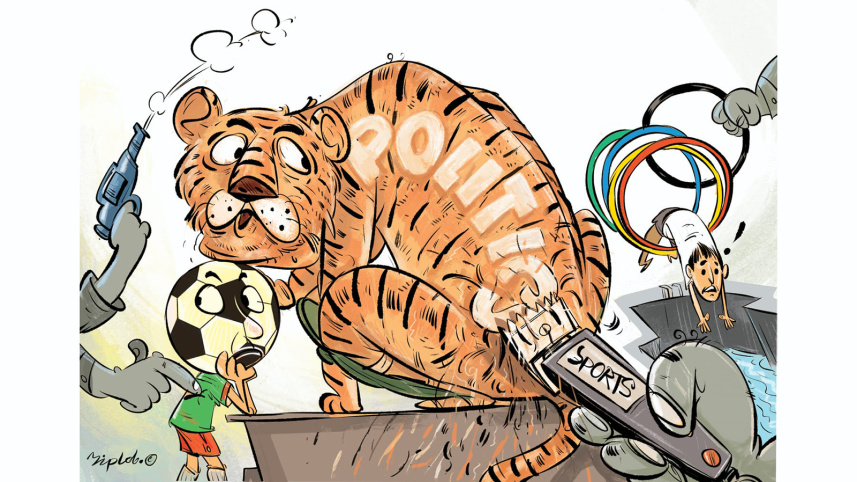
If international sports can be equated as pseudo-battles between two competing nations, mega sporting events like a World Cup or the Olympics can be thought of as an all-out war with honour at stake.
Unlike actual wars, where avoiding direct combat is often the most desirable outcome, in the symbolic battles of sport, absence brings shame, signalling a country’s failure to produce athletes who can compete with the world’s best.
In its 54 years of existence, Bangladesh have endured this ignominy repeatedly. It holds the unwanted record of being the country with the largest population to never win an Olympic medal, and it is far away from qualifying for the men’s football World Cup or the hockey World Cup. In fact, it hasn’t produced many athletes who can compete at the world level.
The sole exception to this culture of sheer mediocrity is cricket.
After trying for two decades, Bangladesh made its debut in the cricket World Cup in 1999. Including that maiden voyage in England, Bangladesh have so far competed in a total of 16 World Cups — seven ODI World Cups and nine T20 World Cups — in men’s senior cricket.
Although their trophy cabinet remains empty after 16 attempts and they are yet to go past the quarterfinal stage in the World Cup, through consistent appearances, Bangladesh has positioned itself as part of the upper echelon of cricket, a sport played in 110 countries.
They were set to do it once again in the 10th edition of the T20 World Cup in India and Sri Lanka, scheduled to begin on February 7.
But not anymore, as they were replaced by Scotland on January 24, after weeks-long failed negotiations between BCB and ICC about the relocation of Bangladesh’s matches from India amid security concerns.
This unexpected turn stemmed from an incident that set off the row, underscoring a trait common to both pseudo and real wars: the tendency to erupt from a single spark.
The spark
According to historians, the assassination of Archduke Franz Ferdinand, heir to the Austro-Hungarian throne, on June 28, 1914, in Bosnia at the hands of a Serbian teenager started a domino effect that led to the First World War, one of the bloodiest conflicts in human history that claimed around 20 million lives.
The row between the BCB and the ICC was triggered by what the ICC later referred to as an “isoloated” and “unrelated” event, yet it ultimately pushed Bangladesh out of the T20 World Cup.
On January 3, the Board of Control for Cricket in India (BCCI) instructed Indian Premier League (IPL) franchise Kolkata Knight Riders to release Bangladesh pacer Mustafizur Rahman from their squad without specifying any reason, only saying it was done “due to the recent developments.”
The BCCI seemingly bowed its head to pressure from right-wing politicians and religious groups to remove Mustafizur without any cricketing cause, which was the foundation of Bangladesh’s claims of security concern.
The BCB, under the guidance of the government, reacted strongly, sending a letter to ICC the very next day to request relocation of tournament matches from India — where the Tigers were supposed to play all four of their Group C matches.
What followed was weeks-long back-and-forth communications, differing speculations disseminated from online reports, and it eventually ended with both BCB and ICC staying unchanged in their respective positions.
ICC rejected Bangladesh’s request while the BCB, as per the government’s directive, said it can’t travel to India under the current circumstances, which led to ICC eventually naming Scotland in their stead.
Bangladesh’s exit from the T20 World Cup is unique in many ways. ICC never banned Bangladesh from competing, and neither the BCB nor the government ever said the Tigers don’t want to compete.
There was no ban from the ICC, nor a boycott from the BCB, still, Bangladesh are no longer in the World Cup.
The bans
Sports and geopolitics have long been intertwined, with wars often triggering exclusions from global competitions. The 1920 Antwerp Olympics, the first major event after the First World War, barred Austria, Bulgaria, Germany, Hungary and the Ottoman Empire for their roles in the conflict, with Germany excluded again in Paris. A similar pattern followed after the Second World War, when Germany and Japan were left out of the 1948 Olympics and the 1950 FIFA World Cup.
Wars have remained the most consistent cause for exclusion. Yugoslavia were banned from the 1992 Barcelona Games and the 1994 World Cup due to UN sanctions over the Balkan conflict, while Russia missed the 2022 World Cup and will sit out the 2026 edition over the Ukraine invasion. South Africa faced the longest ban, excluded from the Olympics, FIFA World Cup and international cricket from 1964 until the early 1990s due to apartheid. Afghanistan were barred from the 2002 Games under the Taliban, and Kuwait from the 2016 Rio Olympics over government interference, with their athletes competing as Independents — a route also taken by Russian athletes in 2022.
The boycotts
Boycotts became a tool of collective protest, formalising the link between sport and politics. The 1956 Melbourne Olympics saw seven nations withdraw for political reasons: Egypt, Iraq and Lebanon over the Suez Crisis; the Netherlands, Spain and Switzerland against the Soviet invasion of Hungary; and China over Taiwan’s inclusion. The first high-profile football boycott came when Uruguay skipped the 1934 and 1938 World Cups in protest over limited South American participation in Europe.
Subsequent decades saw further political boycotts. In 1966, African nations stayed away from the World Cup in England over FIFA’s single qualification spot for Africa, Asia and Oceania. In 1976, 29 African countries boycotted the Montreal Olympics after the IOC declined to sanction New Zealand over its rugby tour of apartheid South Africa; 32 nations repeated the protest at the 1978 Edinburgh Commonwealth Games. The Cold War prompted the largest boycott in 1980, when over 60 countries, led by the US, skipped the Moscow Olympics; the Soviet bloc retaliated in 1984 with 15 countries missing Los Angeles.
In the 21st century, boycotts have largely become symbolic, with diplomatic withdrawals by the US, UK, Australia, Canada and others at the 2014 Sochi and 2022 Beijing Winter Olympics over Russia and China’s human rights records, while still allowing athletes to compete.
Bangladesh’s unique situation
Compared to other events, the cricket World Cup has been lucky in this regard, hardly ever facing a boycott nor has the ICC imposed any bans.
There have been instances when teams have refused to travel to a certain venue owing to security and other concerns during a World Cup.
It happened in the 1996 World Cup, when Australia and West Indies refused to go to Sri Lanka while in the 2003 edition, England and New Zealand refused to travel to Zimbabwe and Kenya, respectively.
In all these cases, the team that refused to travel had to forfeit that match.
When Australia cited it won’t send its team to Bangladesh for the Under-19 World Cup in 2016, they were promptly replaced.
However, when India did the same before the 2025 ICC Champions Trophy, refusing to travel to Pakistan owing to security risks and government orders, the ICC staged multiple tri-party communications and introduced a hybrid model, as part of which India and Pakistan won’t have to travel to the other country for any ICC event till 2027.
But when Bangladesh gave the same reasoning as India — security concerns and government order — they were strung along by the ICC for a few weeks before being outright rejected.
As said before, Bangladesh did not boycott nor were they banned from the upcoming T20 World Cup. The best way to describe their ousting, perhaps, would be term it a procedural exclusion.
Procedural exclusion
Till 2016, ICC had set a decent precedent. It had been firm when a country refused to travel to another country for a World Cup match, by either making them forfeit that game or by replacing them from the tournament.
Had the India incident not happened in 2024, the ICC could hardly be questioned for how it dealt with the Bangladesh case.
In its media release where it announced Bangladesh’s request has been rejected, one of ICC’s reasoning were that it did not want to set a bad precedent by accepting Bangladesh’s last-minute request.
But a poor precedent had already been set.
Yes, India had made their request months prior, before the tournament schedule had been announced. However, the schedule announcement was unusually delayed that year by the ICC, as if it had been expecting a rejection from the BCCI.
Furthermore, ICC had intentionally brought in PCB in the discussion as the hosts when India refused to travel. But in its discussions with the BCB, the BCCI was never involved, at least formally.
In that press release, the ICC referred to IPL as just “a domestic league,” but everyone knows that it is, in fact, the biggest money-making machine of the richest cricket board in the world, through which it exercises its power over world cricket and for which even the ICC has allotted an international cricket-free two-month window every year.
From the looks of it, ICC took its time to follow its written procedures, made sure it kept no loopholes and excluded Bangladesh from the tournament after the BCB refused to budge from its position.
The BCB, undoubtedly, made errors in the negotiations. The current board’s lack of diplomatic experience was evident as it has been reported that it failed to engage other boards in the issue, when it should have expected that the matter could go to a voting, as it did, where other than Pakistan the BCB found no support.
The aftermath
For Bangladesh, the die has been cast. The BCB reportedly faces a major earnings hit in the future and its relations with the ICC and the BCCI is expected to sour further.
The BCB is receiving some plaudits from home and beyond but when the financial strain begins, it would be interesting to see how the BCB manages the fallout.
For the ICC, the Bangladesh row is also not yet over. By refusing BCB’s security concerns and choosing to ignore how the BCB cannot go against its government’s directives, it has set a precedence of how to handle similar events in the future. Would it be able settle matters with an iron fist once again if the name of the team is India, Australia or England, instead of Bangladesh, it remains to be seen.
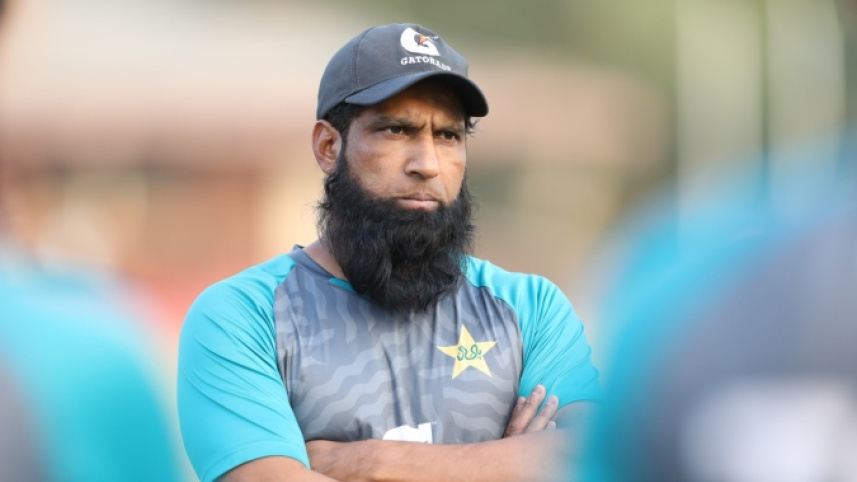
Former Pakistan cricketer Mohammad Yousuf criticised the International Cricket Council’s (ICC) decision to replace Bangladesh in the upcoming T20 World Cup, set to be played in Sri Lanka and India from February 7, questioning its “fairness”.
“The combined cricket viewership of New Zealand, Australia, Scotland, Nepal, the Netherlands, Ireland, Namibia, Zimbabwe, Sri Lanka and Afghanistan is broadly equivalent to the viewership Bangladesh generates on its own,” the legendary batter wrote on his official X account yesterday.
He further pointed out that while the aforementioned 10 nations combined account for “178 million” in viewership, Bangladesh alone accounts for “176 million”.
“In a sport driven by global audiences, sidelining Bangladesh’s legitimate security concerns raises serious questions about consistency and governance. When accommodation becomes selective, fairness disappears. Cricket cannot be administered by influence — only by principle,” he stated.
Rejecting the Bangladesh Cricket Board’s (BCB) request to relocate Bangladesh’s matches outside India, the ICC announced last Saturday that Bangladesh had been replaced by Scotland in the tournament, citing logistical challenges in altering the schedule so close to the start of the event.
In a statement, the ICC said the decision was taken after it found no “credible or verifiable security threat” to the Bangladesh national team in India.
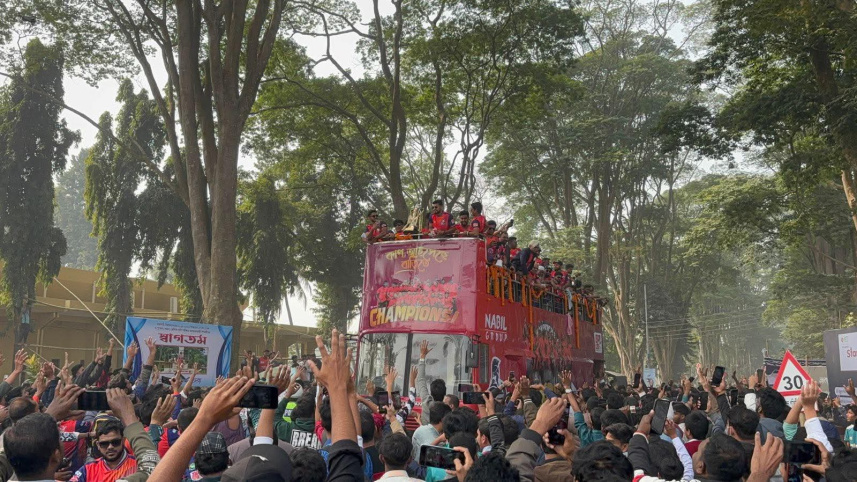
Rajshahi Warriors, champions of the recently concluded Bangladesh Premier League (BPL) T20, were accorded a warm reception in Rajshahi as they paraded through the north-western city on an open-top bus today.
The team arrived in Rajshahi on Monday morning, reaching Hazrat Shah Makhdum (R.) Airport at around 10:30 am, where an open-top bus was waiting.
Carrying the BPL 12 trophy, the cricketers boarded the bus and began their celebratory procession.
Escorted by police, the bus moved towards the city, surrounded by a large number of cricket fans on motorcycles.
Supporters waved placards reading “Gorber Joy” (“Joy of the Gorbers”), “Birer Shohor” (“City of Heroes”) and “Joy esheche, cup utheche” (“Victory is here, the cup is lifted”), while the front of the bus bore the slogan, “Cup aise bari te” (“The cup has come home”).
The procession travelled from the airport along the Rajshahi–Naogaon highway, passing Amchattar, Biman Chattar and the RUET flyover before reaching Paris Road of Rajshahi University.
University students welcomed the team by showering flowers, as captain Najmul Hossain Shanto and Mushfiqur Rahim repeatedly held the BPL trophy aloft.
From the university, the bus moved through Talaimari and Shaheb Bazar to Rajshahi Collegiate School, where students again gathered to greet the players.
Similar scenes were witnessed in front of Rajshahi College. The procession later continued through Lakkhipur, Darikharbona, Railgate and Amchattar before concluding at Nabil Industrial Park in Paba.
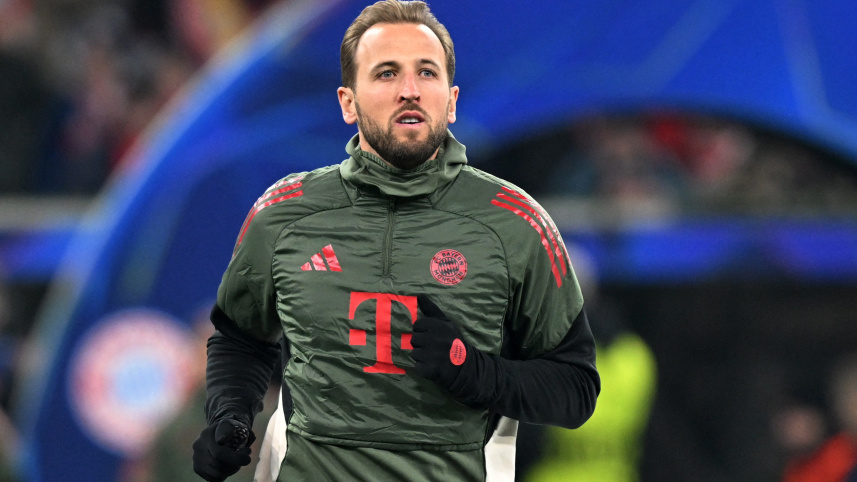
Bayern Munich sporting director Max Eberl on Monday confirmed the club are in talks to extend Harry Kane’s deal at the club.
The 32-year-old England forward, who joined Bayern in 2023, has a deal until 2027.
“We’re talking to Harry, we’re talking,” Eberl said at a Bundesliga event in Frankfurt.
“Everyone knows at some point a decision has to be made,” he added.
Club CEO Jan-Christian Dreesen said on Monday: “Harry has great confidence in us and he feels comfortable in Munich.
“He and his family are settled in. Therefore we’ve got absolutely no reason to rush.”
Long without a team trophy, Kane broke his drought in 2025 when Bayern won the Bundesliga.
This campaign, Bayern are eight points clear in the league and sit second in the 36-team Champions League table.
Speaking in October, Kane said he could “definitely imagine” extending his stay in Germany.
Kane has scored 119 goals in 126 games for Bayern, while adding 30 assists.
This campaign, Kane has 34 goals in 30 games. With 21 goals in 19 Bundesliga matches, Kane is on track to break the single season league record of 41 goals set by Robert Lewandowski in 2020-21.
When Trudy Lindblade, the chief executive of Cricket Scotland, said, “We do feel for the Bangladesh team,” her words captured both empathy and the strange, sudden opportunity now facing Scottish cricket.
Scotland’s invitation to the T20 World Cup came not through qualification, but through extraordinary circumstances—Bangladesh’s last-minute withdrawal after the ICC refused to shift their fixtures out of India. For Scotland, it was a lifeline. For Bangladesh, it was heartbreak.
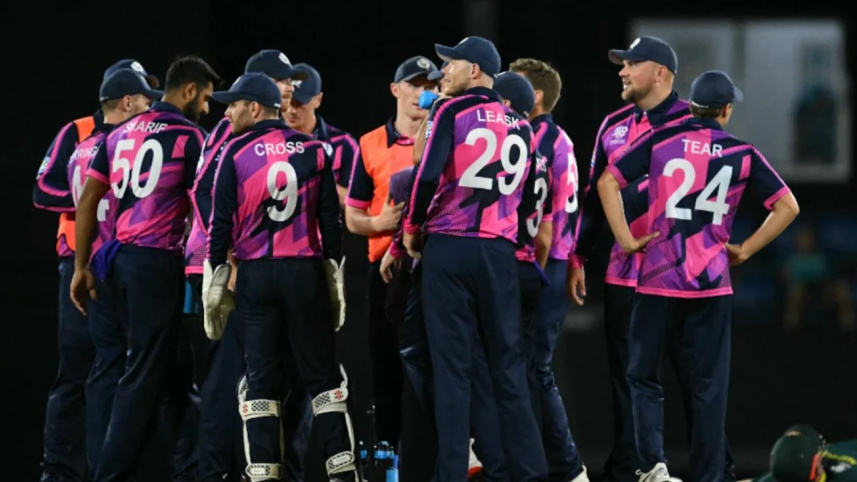
The news arrived late on Saturday, catching Cricket Scotland off guard. Defeats to Italy and Jersey at the Europe Regional Final had ended their World Cup hopes months earlier. Now, as the highest-ranked team not already qualified, Scotland were offered a place at the tournament. “This is not how we wanted to go to a World Cup,” Lindblade admitted.
“There is a qualification process, and nobody wants to be invited in this way. We acknowledge it’s unique circumstances, and we do feel for the Bangladesh players.
The scramble that followed was intense. Within 48 hours, Cricket Scotland had to assemble a 15-man squad, arrange travel, and begin the complex visa process for India. The uncertainty surrounding Indian visas—particularly for players with Pakistani heritage—loomed large, especially for fast bowler Safyaan Sharif, born in Huddersfield to Pakistani parents and raised in Scotland from the age of seven.
Cricket Scotland received assurances from the ICC that a team was working “very, very hard” to ensure visas would be granted in time. Lindblade described the process as an “unknown,” regardless of how much notice a team receives. Head of performance Steve Snell praised the ICC’s support and expressed confidence that Scotland would reach India, noting that it would reflect poorly on global cricket if an invited team could not enter the host country.
Despite the chaos, Scotland announced a squad blending experience and fresh promise. Richie Berrington will captain the side, joined by familiar faces such as George Munsey, Mark Watt, and Safyaan Sharif. Tom Bruce, a former New Zealand international who switched allegiance to Scotland, and 19-year-old Afghanistan-born fast bowler Zainullah Ihsan headline the new inclusions. Ihsan, the only uncapped player, has impressed at youth and ‘A’ level and now stands on the brink of an international debut.
Notable absentees include express pacer Chris Sole, who has stepped away from professional cricket, and Scott Currie, now ineligible after being selected by England. The squad is supported by two travelling reserves and three non-travelling reserves, ensuring Scotland can field a team even if visa delays occur.
Preparation time is limited. Warm-up matches against Afghanistan and Namibia in Bengaluru on February 2 and 4 offer rare opportunities to adapt before the opening fixture against West Indies at Eden Gardens on February 7. Scotland’s group also includes England, Italy, and Nepal, with the top two teams advancing to the Super 8s.
Steve Snell believes Scotland can compete despite being underdogs. “The pressure will be on the other teams,” he said, “because they’ve had all this preparation time.” New head coach Owen Dawkins echoed that sentiment, calling the past 48 hours a “whirlwind” but expressing confidence that Scotland’s players can make an impact.
This is not the first time Scotland have entered a World Cup late. In 2009, they replaced Zimbabwe under similar circumstances. History, it seems, has repeated itself.
Yet, amid the urgency and excitement, Cricket Scotland has not forgotten the human cost of this opportunity. “We certainly have for the Bangladesh team,” Lindblade reiterated. In a sport defined by competition, Scotland’s World Cup journey now begins with compassion—an acknowledgment that their chance was born from another team’s loss, and a resolve to honor that opportunity with respect, humility, and fierce determination.
Liam Dawson, who has been with the England squad at four different World Cups but never played a match, is hoping to make his debut at the global tournament in next month’s Twenty20 World Cup at the age of 35.
Dawson was in the squad at the T20 World Cup in 2016 and the 50-over one in 2019. He was a travelling reserve in the T20 World Cups of 2021 and 2022 and last month was named in England’s 15-man party for this year’s tournament co-hosted by India and Sri Lanka.
He has scored one fifty and taken 33 wickets for England in 33 matches across all formats and has been the team’s most economical bowler in the ongoing one-day international (ODI) series against Sri Lanka in Colombo.
Left-arm spinner Dawson conceded 31 and 40 runs from his 10 overs in both matches, with the series level at 1-1 going into Tuesday’s decider.
“Obviously, the older you get. Sometimes you don’t expect to be involved. I’m 35 now but it’s amazing to be back involved. And obviously, the World Cup is going to be a really cool occasion if I’m selected to play,” Dawson told reporters on Monday.
England will play three T20 matches against Sri Lanka before kicking off their World Cup campaign against Nepal in Mumbai on February 8.
Brazil formally has told FIFA it wants to host the 2029 Club World Cup, according to a report by ESPN Brazil.
The request was delivered during meetings in Rio de Janeiro as FIFA president Gianni Infantino visited the country.
Infantino’s trip was focused on kick-starting the buildup to the 2027 Women’s World Cup, which will be staged across eight host cities in Brazil.
Behind the scenes, Brazilian Football Confederation (CBF) officials continued to push for FIFA’s expanded club tournament to grace South America’s biggest market. FIFA did not run a traditional bidding contest for the 2025 edition — instead appointing the United States to stage the 32-team event — and has yet to outline how the 2029 host will be selected.
CBF president Samir Xaud has framed the talks as ongoing, saying last year: “It’s a subject I discussed with president Infantino… God willing, Brazil will host the 2029 Club World Cup.”
For 2029, Brazil already has one club assured of a place in the tournament. Flamengo earned its spot by winning the 2025 Copa Libertadores title.
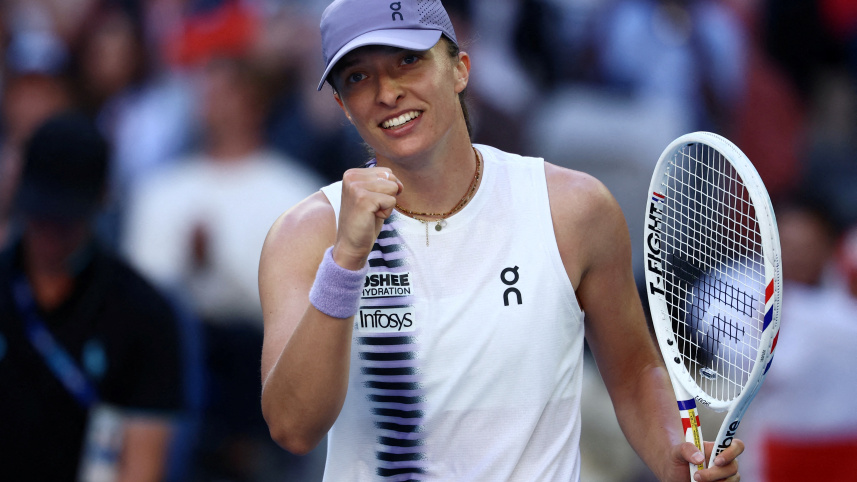
Six-time major champion Iga Swiatek endured a roller-coaster ride before sealing her place in the Australian Open last 16 on Saturday.
The Polish second seed, who is chasing a maiden Melbourne title, wobbled before beating 31st Russian seed Anna Kalinskaya 6-1, 1-6, 6–1.
Swiatek faces qualifier Maddison Inglis next after Naomi Osaka pulled out of her third-round match against the Australian because of injury.
The former world number one Swiatek had no idea at the end of her match that Osaka had withdrawn.
“I don’t know what my reaction should be,” she said when told the news by the on-court interviewer.
“But I hope Naomi is well and it’s exciting to be in the fourth round again.”
Swiatek has won four French Opens, the US Open and Wimbledon, but a title at Melbourne Park has proved elusive.
Last year, she surged into the last four but failed to get past eventual winner Madison Keys.
Swiatek made a fast start, breaking Kalinskaya for an immediate 2-0 lead at Margaret Court Arena, where the roof was shut because of the hot weather.
It was 3-0 in 10 minutes as the 24-year-old threatened a quick conclusion.
The Pole wrapped up the first set up in 24 minutes, after which Kalinskaya needed a medical timeout and was seen by a physio. She had strapping on her lower back.
Next it was Swiatek’s turn to suffer and go down by the same 6-1 scoreline. She then too had medical treatment.
They came out for the deciding set and it was all change again, Swiatek flipping a switch and smiling broadly at the end as she emerged victorious from a topsy-turvy encounter.
“I did not feel I was playing any worse in the second set, she just played in all the balls that went out in the first set,” she said.
“I just kept going because the momentum can change for sure.”
Swiatek arrived in Melbourne on the back of two singles defeats at the United Cup and was then pushed hard by Chinese qualifier Yuan Yue in round one.
She was more impressive in the second round, soaring past Marie Bouzkova of the Czech Republic for the loss of just five games.